

zoom
Diethylene glycol isooctyl ether
-
Category:
Specialty Chemicals
Your Questions and Comments
Your sales and customer service desk partners within China Amines Co will continue to serve you. You can also contact us via our headquarter office-
Email:info@chinaamines.com
China Amines Co
Product Profile
Diethylene Glycol Isooctyl Ether (DEG Isooctyl Ether)
CAS No.: 54446-79-6
Synonyms / IUPAC Name: Diethylene glycol isooctyl ether; 2-(2-(2-ethylhexoxy)ethoxy)ethanol
Molecular Formula: C₁₄H₃₀O₃
Molecular Weight: ~246.39 g/mol (approx.)
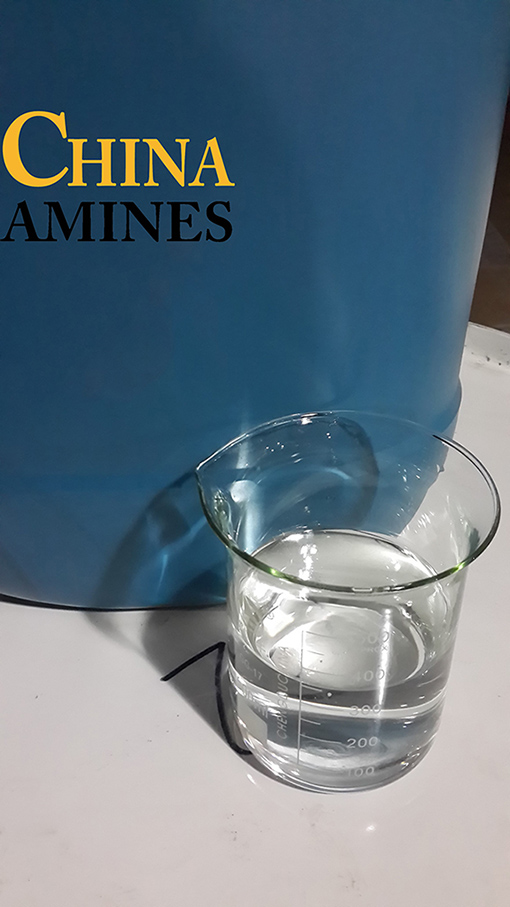
Appearance: Clear, colourless to pale yellow viscous liquid with a mild ether-like odour.
Physicochemical Properties (Typical)
- Boiling Point: approx. 280–285 °C
- Density: approx. 0.92–0.94 g/cm³
- Vapour Pressure: < 0.001 mmHg @ 25 °C
- Solubility: Insoluble in water; miscible with alcohols, esters and hydrocarbons
- Thermal/Chemical Stability: Resistant to hydrolysis under neutral conditions; decomposes above ~250 °C releasing decomposition products
- Flash Point: approx. 130 °C (closed cup)
Purity & Quality Standards
- Typical Purity: ≥ 98% (industrial grade)
- Appearance: Free from visible particulates or haze; consistent colour per batch
- Specification Indicators: Customer-definable limits for acid value, moisture content and residual solvents
- Storage Recommendation: Store sealed in a cool, dry, well-ventilated area; protect from strong oxidisers and alkalies
Applications / Uses
- Coatings & Inks: High-boiling solvent that improves wetting, flow and film formation in high-temperature coatings (automotive, aerospace, industrial finishes).
- Cleaning & Degreasing: Effective in heavy-duty degreasing and machinery-cleaning formulations for oils, greases and lubricants.
- Personal Care: Used as an emollient or stabiliser in certain cosmetic formulations for improved spreadability and skin feel.
- Chemical Intermediates: Building block for specialty esters, surfactants and lubricant additives.
Safety & Handling
- Flammability: Combustible liquid; vapours may form explosive mixtures under certain conditions.
- Health Hazards:
- Inhalation: Low volatility reduces inhalation risk under normal conditions; prolonged exposure may cause dizziness or nausea.
- Skin Contact: May cause mild irritation or dryness after repeated/prolonged exposure.
- Eye Contact: Causes moderate eye irritation.
- Ingestion: Oral LD₅₀ (rat) approx. 1,400–2,000 mg/kg (indicative).
- Precautions:
- Use only in well-ventilated areas or with local exhaust ventilation.
- Wear protective gloves, eye/face protection and appropriate protective clothing.
- Keep away from ignition sources, strong oxidisers and strong alkalis.
- Ground and bond containers during transfer to prevent static accumulation.
- Spill Response: Contain spill, absorb with inert material (e.g., sand), collect for disposal and ventilate area; avoid discharge to drains.
- Reactivity / Incompatibilities: Avoid strong oxidising agents and strong alkalies; may decompose under excessive heat.
Packaging & Storage
- Packaging: Supplied in sealed metal drums or high-quality solvent-resistant containers appropriate for industrial solvents.
- Storage Conditions: Store in a cool (< 30 °C), dry, well-ventilated area away from direct sunlight, heat and incompatible materials; keep containers tightly closed when not in use.
- Shelf Life: Stable under recommended storage conditions; verify appearance and test before prolonged storage.
- Transport & Disposal: Handle and dispose per local regulations for combustible organic solvents.