

Aqueous Dimethylamine and DMAA: Understanding the Hydrogel Connection
2026-11-12
China Amines Co., Limited
A soft, water-rich polymer material can have a supply chain beginning with a much smaller molecule. One documented connection runs from aqueous dimethylamine to N,N-dimethylacrylamide, a monomer used in polymer development.
For customers discussing DMA solution with China Amines, this example shows why a feedstock’s downstream role deserves precise explanation. The amine, the monomer and the resulting polymer each have their own identity and acceptance requirements.
From Amine Feedstock to Functional Monomer
European Patent EP0070425B1 includes an example using aqueous dimethylamine in the preparation of N,N-dimethylacrylamide. This establishes a documented route, rather than proving that every producer uses the same process or feedstock concentration.
N,N-Dimethylacrylamide is identified by KJ Chemicals with CAS number 2680-03-7. It is a distinct amide monomer capable of radical polymerization. Aqueous DMA is not a ready-to-use substitute for that monomer.
To keep the abbreviations clear, this article uses DMA for dimethylamine and DMAA for N,N-dimethylacrylamide. Research papers may use different abbreviations, so the full chemical name remains essential when comparing documents.
How the Polymer Connects with Hydrogels
Poly(N,N-dimethylacrylamide), often abbreviated PDMA or PDMAAm, is a hydrophilic polymer. Researchers have investigated both its polymer chains and networks formed through different crosslinking strategies.
The network design matters. A monomer’s ability to form a polymer does not independently establish the behavior of a finished hydrogel.
For example, Algi and Okay studied PDMA-based hydrogels incorporating hydrophobic associations and evaluated their swelling and mechanical behavior. Their findings concern the particular materials and conditions investigated, rather than a universal property of every DMAA-derived gel.
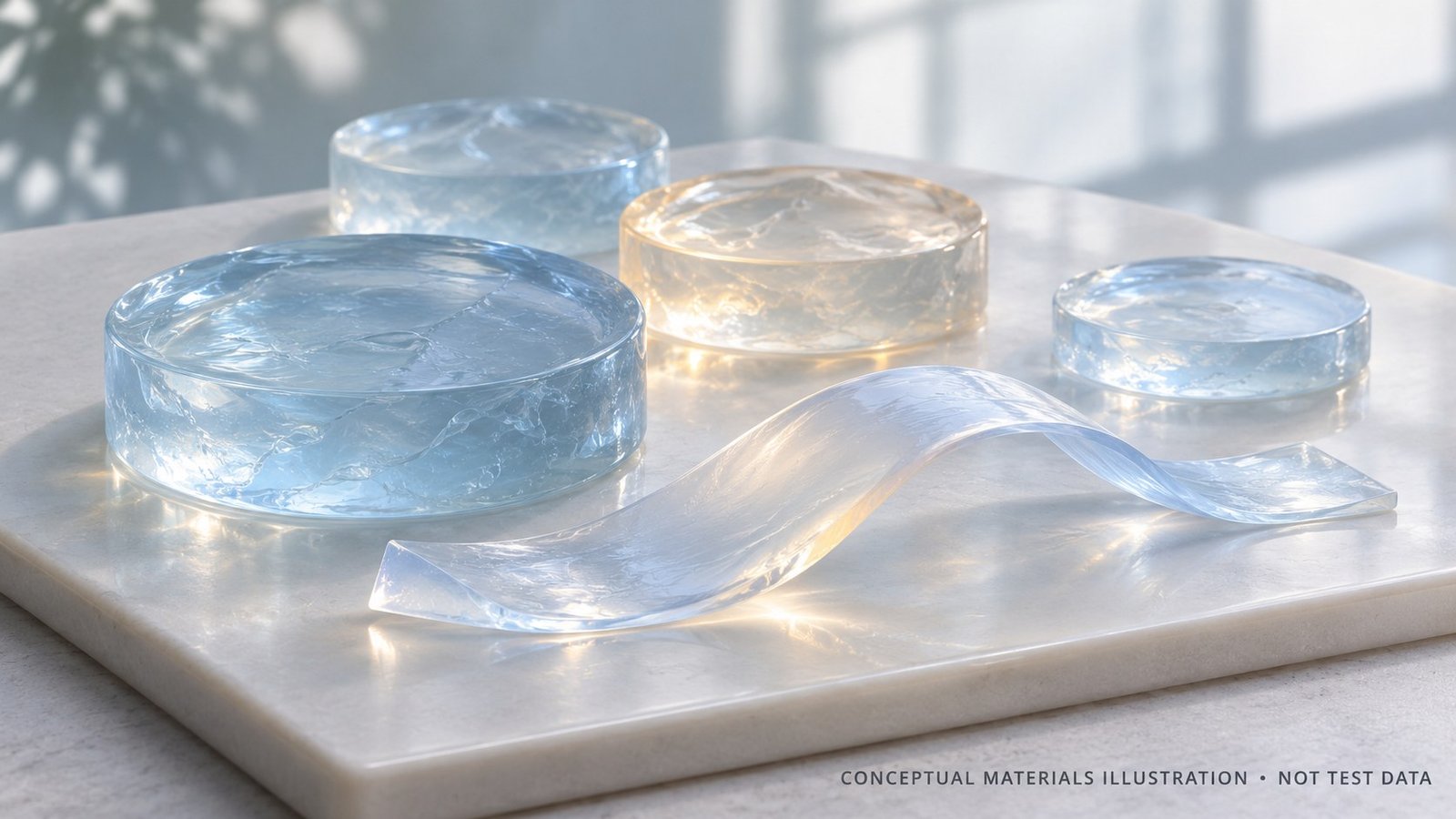
A transparent, jelly-like appearance is therefore a poor technical specification—however photogenic the sample may be.
Measure the Material You Intend to Use
A development team considering a DMAA-based hydrogel should define the performance question before comparing samples.
Useful records include the polymer composition, network design, conditioning medium, temperature, test duration and measurement method. Swelling, stiffness and recovery should be evaluated against the intended application rather than inferred from the monomer name.
The cited hydrogel study assessed swelling and mechanical response separately. That approach illustrates why a single observation, such as water uptake, cannot describe every relevant aspect of a material.
Set Requirements at Each Supply-Chain Stage
| Stage | What needs qualification |
|---|---|
| Aqueous DMA feedstock | Agreed concentration, impurities and suitability for the chosen synthesis |
| DMAA monomer | Identity and the manufacturer’s agreed monomer specification |
| Polymer or hydrogel | Composition, processing consistency and application-specific performance |
For a monomer manufacturer, incoming DMA requirements should follow the actual synthesis and purification process. For a polymer customer, an acceptable upstream assay cannot establish finished-material performance.
Keeping these stages clear helps purchasing and development teams request the right evidence without transferring a claim from one chemical to another.
About China Amines
Discuss your aqueous dimethylamine feedstock requirement with China Amines Co., Limited at www.chinaamines.com. Provide the intended manufacturing process, required concentration, analytical limits, order quantity and delivery destination so the inquiry can address your actual specification.