

Aqueous Dimethylamine: Biobased Carbon Is Not a Carbon Footprint
2026-11-12
China Amines Co., Limited
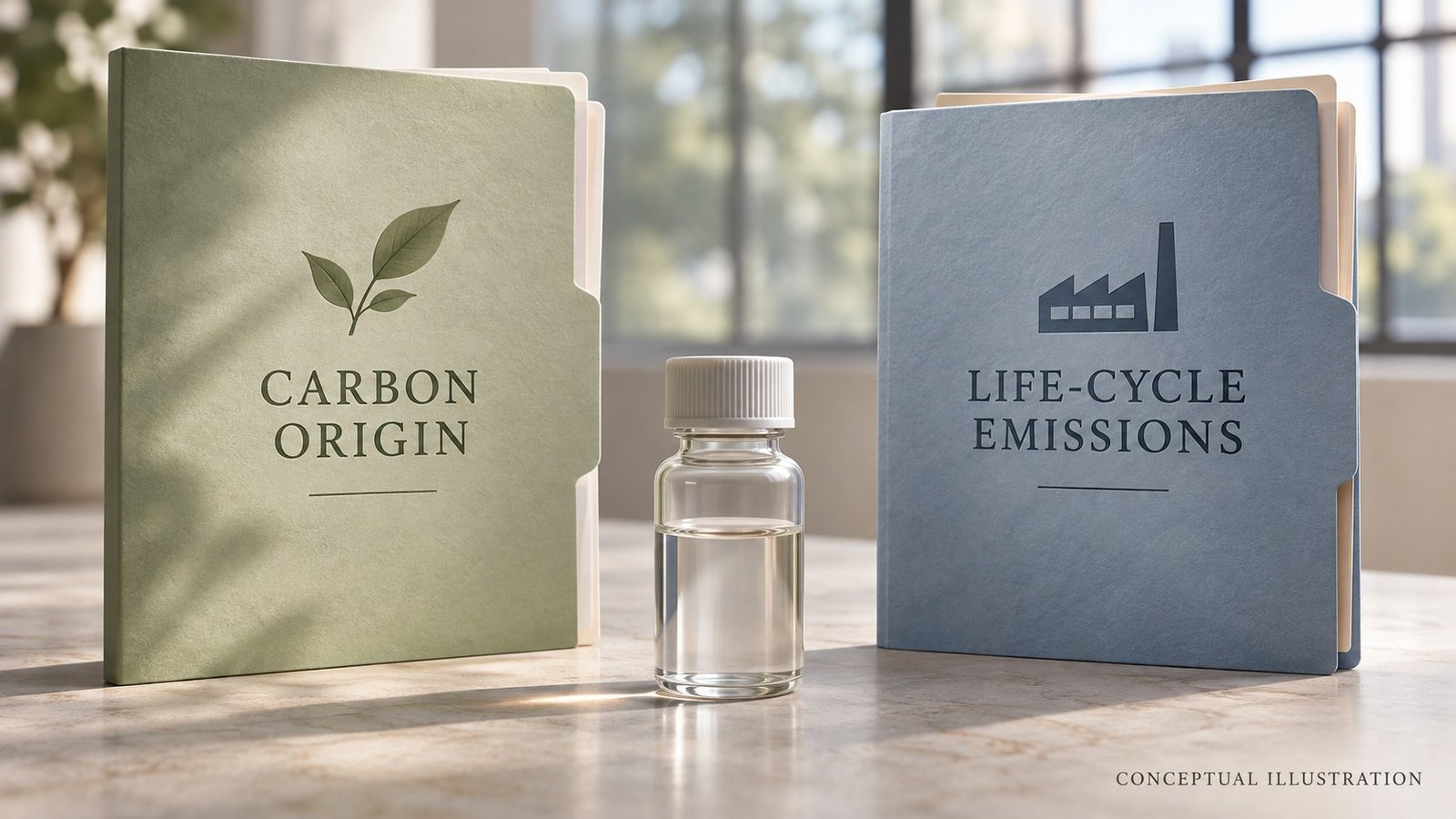
“Is this aqueous dimethylamine biobased?” and “What is its carbon footprint?” sound like neighboring questions. They require different evidence. One concerns carbon origin; the other concerns greenhouse-gas emissions associated with a defined product system.
For buyers discussing environmental requirements with China Amines, identifying the question first prevents a familiar procurement problem: receiving an impressive document that answers something else.
What Biobased Carbon Content Measures
ASTM D6866 uses radiocarbon analysis to distinguish contemporary biological carbon from fossil carbon. Its scope does not make the result a general environmental-impact assessment or a performance certification.
The USDA BioPreferred explanation expresses biobased content as new organic carbon relative to total organic carbon. Water and inorganic carbon are excluded from that calculation. Read the basis carefully: the percentage is not automatically the mass percentage of renewable material in a delivered aqueous solution.
Why Water Content Matters
Consider a hypothetical solution containing 40% dimethylamine by mass and 60% water. One kilogram contains 0.4 kg of DMA. Even if an applicable test reported 100% biobased organic carbon, that would not turn the solution into 100% DMA.
Adding water changes the DMA mass fraction without adding organic carbon. This distinction matters when someone compares concentration, organic-carbon origin and delivered product mass in the same spreadsheet. They are different denominators.
This example explains the calculation only. It does not claim a biobased origin, certification or biobased-grade availability for China Amines products.
What a Product Carbon Footprint Measures
A product carbon footprint addresses greenhouse-gas emissions and removals within a defined system, generally expressed as carbon-dioxide equivalents. ISO 14067 provides requirements for quantifying and reporting a product footprint, including a partial footprint, consistently with life-cycle assessment principles.
A statement such as “50% biobased carbon” therefore does not establish a 50% reduction in greenhouse-gas emissions. A comparison also needs a consistent reporting unit: one kilogram of delivered solution and one kilogram of contained DMA are different quantities. System boundaries and included transport stages must be understood before comparing results.
Ask for Evidence That Matches the Claim
- Does the claim concern carbon origin, greenhouse-gas emissions, or both?
- Does the document identify the product, concentration, applicable production site and reporting period?
- What test or accounting method and calculation basis were used?
- For a footprint, what reporting unit and system boundary apply?
- Does the evidence cover the material actually being quoted?
A green leaf on a presentation cannot supply those details, however carefully it has been drawn.
Keep Environmental Evidence and Quality Specifications Separate
Carbon-origin evidence does not replace assay, impurity limits or the agreed quality specification. Equally, a satisfactory COA does not establish a low carbon footprint.
Contact China Amines with the aqueous dimethylamine concentration, volume, destination and environmental documentation you require. Specify the claim that needs support so its availability and applicability can be checked for the proposed supply.